If you’ve ever walked through a wastewater treatment plant, a petrochemical refinery, or a food processing facility, you’ve probably seen decanter centrifuges at work—those tall, spinning machines that separate solid waste from liquid slurry with remarkable precision. As a decanter centrifuge supplier, I get asked this question all the time: “What’s the bowl made of?” It sounds simple, but the answer is critical. The bowl is the heart of the machine, the part that takes the most abuse, and the one that will make or break your centrifuge’s performance, lifespan, and reliability. Skimp on material quality, and you’ll be dealing with unplanned downtime, costly repairs, and premature replacements way sooner than you should. Get the right material, and your decanter will run for years, even in the harshest, most corrosive operating conditions. Let’s break down the science, the tradeoffs, and why this choice isn’t a “one-size-fits-all” decision. Decanter Centrifuge
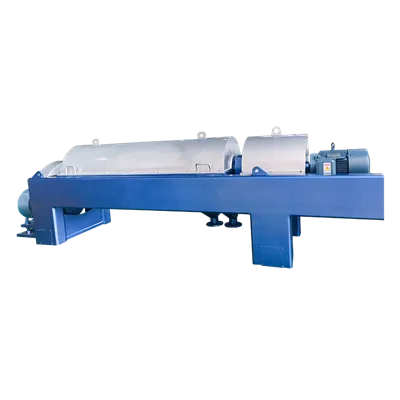
First, let’s ground this in what a decanter centrifuge bowl actually does. Unlike lab centrifuges that spin small sample tubes, industrial decanter bowls spin at high speeds—often 1,000 to 5,000 RPM—generating thousands of G-forces to push solids outward to the bowl wall, while clarified liquid moves inward and is discharged. That constant spinning creates two big stresses: mechanical stress from centrifugal force, and chemical stress from whatever slurry you’re processing. If you’re dewatering sewage sludge, the slurry has water, microbes, and trace chemicals that eat away at metal. If you’re separating crude oil from produced water, you’re dealing with harsh acids, brines, and abrasive sand. If you’re working in the food and beverage industry, the material has to be safe for human contact too, no leaching or contamination. So the bowl’s material has to balance three non-negotiables: strength to handle centrifugal force, corrosion resistance to withstand the slurry, and sometimes food-grade or sanitary compliance for sensitive industries.
Let’s start with the most common material we use: high-alloy stainless steels, specifically duplex stainless steels. Wait, not just any stainless steel—type 304 or 316 is too weak for high-force spinning, and not corrosion-resistant enough for most industrial uses. Duplex stainless steels, like 2205 (UNS S32205), get their name because they have a dual microstructure: a mix of austenite and ferrite, which combines the best of both worlds. Ferrite gives it high strength, while austenite gives it good corrosion resistance. For context, a 2205 duplex bowl is about twice as strong as standard 316 stainless steel, so it can handle much higher centrifugal forces without deforming or cracking. That’s a huge win because a deformed bowl throws off the centrifuge’s balance, leading to vibration, more wear on bearings and gears, and even safety risks. Corrosion-wise, 2205 stands up to many common corrosive slurries: sewage sludge, mild chemical processing streams, and agricultural slurries like manure or grain processing waste. It’s also more affordable than other high-performance alloys, which makes it our go-to for standard, mid-range applications. But it’s not perfect. If you’re working with highly acidic slurries, like some mining leachate or high-salinity brines, duplex stainless steel will start to corrode over time, especially in crevices or welds where the microstructure can weaken. Also, it’s not food-safe for applications that require direct food contact, like separating fruit juices or processing cheese curds. For those, we move to a different alloy.
When sanitary or ultra-high corrosion resistance is required, we turn to super duplex stainless steels, like 2507 (UNS S32750). Super duplex is even stronger and more corrosion-resistant than 2205, with a higher chromium, molybdenum, and nitrogen content that creates a dense, protective chromium oxide layer that resists pitting and crevice corrosion—two of the most common ways bowls fail. Pitting happens when a small area of metal gets damaged, usually by chloride ions in brine or sewage, and corrosion eats a tiny hole that grows over time. Super duplex is much better at resisting that. This is the material of choice for food and beverage processing applications, where we have to meet FDA 21 CFR standards for food contact, and for harsh chemical processing: things like separating petrochemical waste, pharmaceutical intermediates, or mining slurries with high chloride or acid levels. A 2507 bowl can last 10+ years in these extreme conditions, whereas a 2205 bowl might need replacement every 3 to 5 years. The tradeoff? Super duplex is more expensive than duplex, and a bit harder to machine and weld, so fabrication costs go up. But for customers in these sectors, the long-term savings from less downtime and fewer replacements far outweigh the initial cost.
Now, what about even more corrosive environments, like high-temperature acidic slurries or highly oxidizing chemical streams? For those, we use high-nickel alloys, like Hastelloy C-276 or Inconel 625. These alloys have nickel as their main base metal, plus chromium, molybdenum, and tungsten, which makes them almost impervious to some of the harshest chemicals imaginable: sulfuric acid, hydrochloric acid, and high-chloride brines at elevated temperatures. We see these used in industries like upstream oil and gas, where produced water has high levels of hydrogen sulfide (a toxic, corrosive gas) and salt, or in specialty chemical manufacturing. A Hastelloy bowl can last 15+ years in these conditions, but it’s pricey—like 3 to 4 times the cost of a duplex stainless steel bowl. It’s also heavier, so if you don’t actually need that level of corrosion resistance, you’re paying for performance you’ll never use, and adding unnecessary weight to the centrifuge, which can increase energy costs over time. That’s why matching the material to your exact application is so important; overspecifying is just as bad as underspecifying.
Wait, there’s another material that’s come up more in recent years for very specific, low-abrasion applications: ceramic-lined steel bowls. Ceramics are extremely hard and corrosion-resistant, so if your slurry has high levels of abrasive solids, like sand or coal particles that wear down metal bowls over time, a ceramic liner can double or even triple the bowl’s lifespan. The key here is that the ceramic is bonded tightly to the inner surface of a steel (usually duplex or super duplex) core, so you get the strength of steel to handle centrifugal force, and the abrasion and corrosion resistance of ceramic on the inside. We recommend this for mining and mineral processing, where slurries have high silica content that would wear out a standard steel bowl in 2 to 3 years. The downside is that ceramic liners can chip or crack if the centrifuge is unbalanced, or if large, hard pieces of solid get into the slurry and hit the inner wall. So it’s not for every application, but for the right one, it’s a game-changer.
I’ve seen first-hand what happens when suppliers cut corners on bowl material. A few years back, we had a customer in the municipal wastewater industry who bought a used decanter centrifuge from a supplier who’d used a cheap 304 stainless steel bowl. Six months in, the bowl started corroding from the inside out, leaking fine solids into the effluent, and they had to shut down the plant for a week to replace the bowl, costing them over $100,000 in downtime, not to mention the cost of the replacement. When we replaced their bowl with a 2205 duplex stainless steel one, they’ve had no issues in the last five years. Another customer, a craft brewery, was using a generic stainless bowl that had a metallic aftertaste in their filtered beer. We swapped it out for a food-grade super duplex 2507 bowl, which doesn’t leach any chemicals, and they’ve maintained the consistent, clean taste their customers expect.
So how do you choose the right bowl material for your decanter centrifuge? It’s not about picking the most expensive alloy, or the cheapest one. You need to consider three key factors: the composition of your slurry (acidity, salinity, abrasive solids), your operating conditions (temperature, G-force, any sanitary requirements), and your budget, both upfront and long-term. If you’re running a basic dewatering application with mild slurry, duplex stainless steel is the sweet spot. If you’re in food, chemical, or high-salinity environments, step up to super duplex. If you’re dealing with highly corrosive or abrasive slurries, consider high-nickel alloys or ceramic-lined bowls.
As a decanter centrifuge supplier, we don’t just sell machines—we solve problems. That’s why we work with each customer to assess their specific application, not just send a standard unit off the shelf. We test slurry samples, review operating conditions, and recommend the right bowl material to meet your needs, not just our bottom line. Unplanned downtime is the biggest cost for industrial operations—our goal is to help you avoid that by building a machine that’s built to last for your unique work.
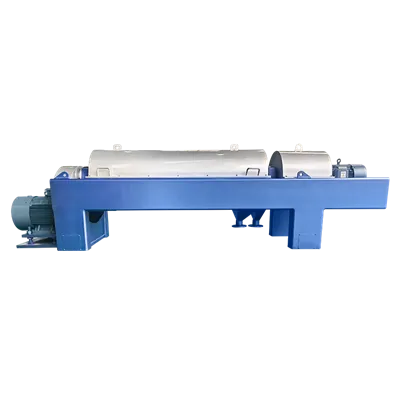
If you’re in the market for a decanter centrifuge, or you’re looking to replace an underperforming one with a bowl that will stand up to your operations, reach out. We can walk you through the material options, answer any questions you have, and help you make a decision that will save you time and money for years to come.
3 Phase Decanter Centrifuge References:
- ASME Boiler and Pressure Vessel Code, Section VIII: Rules for Construction of Pressure Vessels
- Duplex Stainless Steels: Properties and Applications, Stainless Steel World, 2019
- Super Duplex Stainless Steel Handbook, Nickel Institute, 2021
- Hastelloy Alloys: Corrosion Resistance Guide, Haynes International, 2020
- Decanter Centrifuge Design and Materials Selection, International Society for Industrial Centrifuges, 2022
Lishui Yuanrong Environmental Protection Equipment Co., Ltd.
As one of the most professional decanter centrifuge manufacturers and suppliers in China, we have world-leading production equipment and strong manufacturing capabilities. Please feel free to buy customized decanter centrifuge from our factory. Also, quotation is available.
Address: Lot 6-1, Block 15, Wanyang Zongchuang City, Lishui, Zhejiang, China
E-mail: 361184920@qq.com
WebSite: https://www.yrhdc.com/
