If you’ve ever walked through a modern fabrication shop—whether it’s building heavy equipment, steel structures, or even large-scale energy components—you’ve probably seen welding robots humming away on the shop floor. But not all welding robots are built the same. As someone who’s spent years supplying gantry welding robots for industrial operations, I get asked all the time: “How do these gantry setups stack up against articulated arms, scara, or even collaborative welding robots?” The short answer isn’t as simple as “gantries are better”—it depends on what you’re building, how big your parts are, and your shop’s layout. Let’s break this down like I would chat with a regular shop manager over a coffee, no jargon overload, just real talk. Gantry Welding Robots
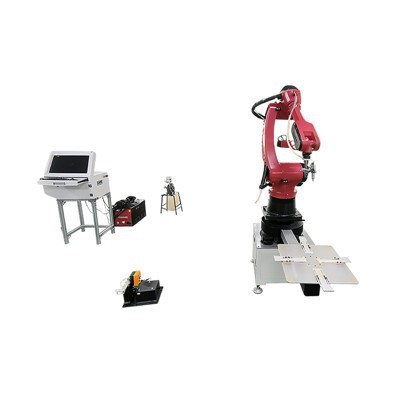
First, let’s get clear on what each type is, because mix-ups happen more than you’d think. Articulated welding robots are the ones you probably picture first: a jointed arm, like a human arm, that swivels and bends. Most shop floors have these, right? They’re versatile for small to medium parts—like car parts, pipe fittings, or even small structural brackets. Scara robots are more rigid, mostly good for flat, repeatable tasks, like spot welding small panels on assembly lines. Collaborative robots (cobots) are the new kids on the block, designed to work near humans without big safety cages, great for small batch runs or low-volume jobs. Then there’s gantry welding robots—also called Cartesian robots, basically a huge, movable frame that spans an area, with a welding head that slides along X, Y, Z axes on that frame.
Let’s start with the big one that makes gantries stand out: part size and capacity. If you’re welding something that’s 10, 20, even 50 feet long—like a bridge beam, wind turbine tower section, or a large ship hull segment—an articulated arm robot can’t handle that. Even the biggest articulated arms top out at a reach of like 10 feet, and their weight capacity for tools (including the welding torch) drops way off as they stretch. Gantry robots? We build our gantries to span whatever width and length your shop needs. One of our clients builds solar tracker frames, which are 25 feet long each—they can’t move the whole frame into a small cell, so their gantry robot drives along the fixed frame, welding every joint in one pass without repositioning the part. Articulated robots would make them reposition the frame 3 or 4 times, which adds time and risk of alignment errors. That’s a huge win for large, long parts, no contest.
But versatility? That’s where the other types shine. If you’re running a job shop that does a mix of small brackets, custom parts, and occasional big beams, gantries might not be your first pick. A 6-axis articulated robot can reach into tight corners of a complex part, weld at weird angles, and switch between a welding torch and a paint gun or a gripper in minutes. Gantries are more rigid and linear—they’re designed for straight, long paths, mostly. If your part has a bunch of curved, irregular welds, a gantry would have to move the part, which is another step. Cobots win here too: they’re cheap, easy to program, and you can have a line worker teach them a new weld in an hour, no fancy training. Gantries take a bit more setup—we usually send a tech to calibrate the frame and walk your team through programming, because the frame’s size means even a tiny misalignment throws off weld quality. That’s a tradeoff: gantries are specialized for high-volume, large-part jobs, while the others do more varied small jobs.
Next up: speed and consistency, two big deals in welding. All welding robots are more consistent than human welders—no fatigue, no bad days, same weld every time. But for large, repetitive welds, gantries often edge out articulated robots. Why? Because gantries move linearly, with less flex. When an articulated arm is stretching to reach a far corner, it has slight deflection in the joints, which can make the wand wobble a tiny bit. On a long weld, that adds up to a inconsistent bead or even a bad weld. Gantries, on the other hand, are mounted to the floor or ceiling, so their movement is super accurate—usually within 0.1 mm over 50 feet, which is way tighter than most articulated robots can manage over a long distance. We had a client in heavy equipment manufacturing who switched from two articulated robots working on long bulldozer blades to one gantry. They cut their weld time per blade by 20% and dropped defect rates by 12%, because the gantry didn’t have that joint deflection. That’s a big number for a shop that’s making 100 blades a week.
Then there’s safety and floor space, which is tied to your shop layout. Cobots are great for small spaces because they don’t need big safety cages—they can work right next to a worker moving parts. Articulated robots also use smaller work cells, so you can fit a dozen of them in a single 10,000 sq ft shop. Gantry robots, though, are bigger. A gantry for a 30-foot long part will take up like the whole width of your shop bay, and you can’t just cram another machine next to it easily. That’s a downside if you need flexibility in floor plan. But wait—safety for high-volume big parts? Gantries can be enclosed with smaller safety barriers around the weld head instead of a huge cage for a big articulated robot. Because the weld head only moves along the gantry, not all over a big space. So for a fixed bay dedicated to large parts, gantries can actually make better use of the space than multiple articulated robots that each need their own cell.
Another thing: upfront cost and long-term value. Let’s be real, shops care about budgets. Articulated robots are the cheapest entry point for robotic welding—you can get a decent 6-axis unit for like $25k to $50k. Cobots are even cheaper, starting around $15k for small units. Gantries? They’re a bigger investment, usually $80k and up, depending on size, payload, and extra features like seam tracking. But here’s the catch: if you’re welding large parts or running high-volume long welds, that extra upfront cost pays off fast. The client I mentioned earlier—they paid for the gantry in 18 months from the labor and defect savings, versus keeping their old articulated robots. Also, gantries have lower maintenance costs over time. Articulated robots have a bunch of moving joints that wear out—you’ll have to replace bearings or seals every few years. Gantries have linear rails and carriages, which are simpler, so less wear and tear. That adds up to more uptime, less downtime for repairs.
Wait, let’s not sleep on seam tracking, either—something all good welding robots have, but gantries do it really well. Seam tracking is when the robot senses where the weld joint is, in case the part is slightly misaligned. For a long beam that’s 50 feet long, even a 1 mm misalignment at one end means the weld is off. Gantries use high-precision laser tracking that works across the entire length of the gantry, so they adjust the weld head in real time, no re-calibration needed. Articulated robots’ seam tracking is often more limited, because the arm’s movement is less consistent over long distances. That’s another big win for parts that have to be exact over a big span.
Of course, no type is perfect. If your shop does a mix of small, complex parts and occasional big jobs, you don’t have to pick one—we see a lot of mid-sized shops that have a couple articulated robots for small work and one gantry for their large runs. The mistake I see shop managers make is buying a gantry just because it’s “the latest thing” when they only need to weld 10-foot parts. It’s overkill. And buying a cheap articulated robot for large parts is just going to lead to frustration and more rework.
Let me give a quick example to drive this home. Last year, a client in steel structure fabrication reached out to us. They were building pedestrian bridges, which are 40 feet long, and they were using two articulated robots to weld the trusses. The robots could handle small parts, but the trusses were long, so each weld took twice as long, and they had a 8% defect rate from joint deflection. They switched to one of our gantry systems, built to span 45 feet, with a 500 kg payload for the welding torch. Now their weld time per bridge is down 30%, defects are at 1%, and they can run two bridges at once on the same gantry by repositioning the part within the bay. That’s the kind of specific win you don’t get with other robot types.
So to wrap this up, here’s the breakdown I always give: if you’re welding large, long, repetitive parts at high volume, gantry welding robots are the way to go. They outperform articulated arms and cobots on accuracy over distance, speed, and cost over time. If you’re doing small, custom, complex parts with frequent changeovers, articulated or cobot robots are more flexible and cheaper upfront. Scara robots only make sense for very specific flat assembly line jobs, so they’re not really a competitor for most welding needs.
If you’re not sure which is right for your shop—whether you’re dealing with 10-foot brackets or 50-foot wind turbine sections—don’t guess. I’ve helped hundreds of shops pick the right robot, no hard sell, just honest talk about their jobs and layout. We work with fabricators, energy companies, infrastructure builders, all kinds of operations. We can walk you through what a gantry would do for your specific parts, compare it to what you’re using now, and even help you with a trial run if you want to test it out. No pressure, just real solutions for your welding line. If you’re ready to chat about upgrading your welding setup, reach out to our team to start a no-obligation conversation.
Industrial Robots References
- International Institute of Welding. (2022). Robotic Welding System Performance: Application-Specific Comparisons. Welding Research Council Bulletin.
- Robotics Industries Association. (2023). Cartesian vs. Articulated Robot Capabilities for Industrial Welding. RIA Technical Report.
- Fabricators & Manufacturers Association. (2022). Cost-Benefit Analysis of Large-Format Robotic Welding Systems. FMA Industry White Paper.
- Welding Journal. (2021). Defect Rate Reduction in Long-Seam Welding: Gantry vs. Articulated Robot Testing. American Welding Society.
Dongguan Chuanglida Intelligent Equipments Co., Ltd.
Address: Room 201, Building 2, No. 61, Shachang 1st Road, Dalang Town, Dongguan City, Guangdong Province
E-mail: haoguangli001@outlook.com
WebSite: https://www.boruntestech.com/
